
Jakarta, December 5, 2024 – After the World Conference on Biodiversity (COP16) which took place on November 1, 2024 in Cali, Colombia, the urgency of ratifying the Indigenous Peoples Bill in Indonesia is increasingly pressing. Recognition and protection of the rights of Indigenous Peoples are key to ensuring their involvement in the implementation of the Kunming-Montreal Global Biodiversity Framework (KM-GBF). Without the Indigenous Peoples Bill, the contribution of Indigenous Peoples to sustainable and inclusive conservation will continue to be hampered.
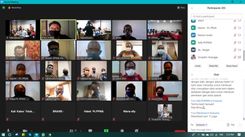
This was conveyed by Cindy Julianty, Program Manager of the Working Group Indigenous Peoples’ and Community Conserved Areas and Territories Indonesia (WGII) in a public discussion entitled “The Urgency of Ratifying the Indigenous Peoples Bill in Responding to Conservation Policies Post-COP16” held at the House of the Indigenous Peoples Alliance of the Archipelago (AMAN), Jakarta, Wednesday (4/12). In addition to Cindy Julianty, also present were Bimantara Adjie (HuMa Association), Teo Reffelsen (WALHI National Executive), Rukmini Paata Toheke (Sulawesi Regional Dynamics JPH AKKM), Mufti Fathul Barri (FWI), Tommy Indyan (AMAN) as resource persons and Salma Zakiyah (Sustainable MADANI) as moderator.
Cindy Julianty also emphasized the importance of Indigenous Peoples involvement in achieving global biodiversity protection targets. "Conservation cannot just talk about environmental preservation. Conservation also means recognizing tenure rights in Indigenous Peoples' areas," said Cindy. She mentioned that the indigenous area database recorded 22.5 million hectares of indigenous areas that have the potential to be conserved. "Conservation practices from below can encourage Indonesia's contribution to achieving global biodiversity targets," she added.
Bimantara Adjie Wardhana, Legal Advocacy Division of the HuMa Association added that although Indigenous Peoples have a strategic position in the Indonesian Biodiversity Strategy and Action Plan (IBSAP), specifically in Target 16 and Target 17, policy implementation often fails to involve them actively and inclusively. "The active and meaningful participation of Indigenous Peoples is often ignored in the implementation of biodiversity policies in Indonesia, for example in the process of drafting the IBSAP. In fact, IBSAP is the key to mainstreaming biodiversity in Indonesia," he said. Meanwhile, Teo Reffelsen, Legal and Defense Manager of the National Executive of WALHI criticized the process of forming the Law on Conservation of Biological Natural Resources and Ecosystems (UU KSDAHE) which was considered to ignore meaningful participation. "Many field facts submitted by the coalition were ignored without clear reasons from the DPR," said Teo. He also reminded that the Constitutional Court since 2012 has mandated the government to form regulations related to Indigenous Peoples, but until now it has not been realized. "Unfortunately, in the AMAN lawsuit, the State Administrative Court failed to assess the principles of judicial order contained in several Constitutional Court decisions related to the urgency of the Indigenous Peoples Law, so that in terms of legislation and policy, indigenous peoples are put in second place. It is no wonder that we see the situation of Indigenous Peoples living in and near forest areas getting worse and more concerning," he concluded.
Rukmini Paata Toheke, Sulawesi Regional Dynamics for the Community-Managed Conservation Area Rights Holder Network (JPH AKKM), explained that the Ngata Toro Indigenous People have long practiced conservation based on local wisdom. These efforts include documenting customary law, managing manageable places and traditional schools. "We have a philosophy of three hearths of life, Taluhi Takuhua, where the community maintains a good relationship with the creator of the earth who has provided its contents with fellow humans and nature. When we damage nature, we damage life. This is our foundation for maintaining ancestral wisdom. This is our pride as Indigenous Peoples. However, the state does not appreciate our efforts," he said.
In line with that, Mufti Fathul Barri, Executive Director of Forest Watch Indonesia (FWI), said that 80% of the world's biodiversity is in the territory of Indigenous Peoples. However, the KSDAHE Law in Indonesia actually belittles their role. "Our conservation paradigm has not shifted, even though Indigenous Peoples have proven to be the main actors in maintaining biodiversity," he said.
Tommy Indyan from the Directorate of Advocacy for Legal and Human Rights Policy of the Indigenous Peoples Alliance of the Archipelago (AMAN), emphasized that the ratification of the Indigenous Peoples Bill is an important step to protect the rights of Indigenous Peoples. He emphasized the need for a clear definition, a simple registration mechanism, and recognition of the rights of women, youth, and indigenous children in the Indigenous Peoples Bill. "The ideal bill must be based on human rights principles and include mechanisms for restoring rights, resolving conflicts, and strengthening the rights to cultural identity and indigenous territories," he said.
The ratification of the Indigenous Peoples Bill not only provides legal protection for Indigenous Peoples, but also strengthen their role in achieving the KM-GBF targets inclusively. This step is crucial to ensure the sustainability of conservation and biodiversity in Indonesia.
The Coalition to Monitor the Indigenous Peoples Bill consists of YLBHI, HuMa, WALHI National Secretariat, KPA, KEMITRAAN, ICEL, Debt Watch, PEREMPUAN AMAN, PUSAKA Foundation, Kaoem Telapak, Madani Berkelanjutan Foundation, BRWA, JKPP, merDesa Institute, RMI, EPISTEMA, Greenpeace Indonesia, Lakpesdam NU, KIARA, LOKATARU, Forest Watch Indonesia (FWI), Sawit Watch, PPMAN, Barisan Pemuda Adat Nusantara (BPAN), Jurnal Perempuan Foundation (YPJ), Coastal and Small Island Indigenous Peoples Forum (Format-P), Kalyanamitra, Indonesian Women's Coalition (KPI), SATUNAMA, Protection International Indonesia, KKC Communion of Indonesian Churches (PGI), ICCAs Indonesia Working Group, AMAN, Samdhana, EcoAdat.