
The Draft Bill on Indigenous Peoples has now gone through the process of harmonization, rounding off, and consolidation of the concept at the DPR RI Legislation Body. The bill is ready to be brought to the DPR RI Plenary Meeting to be ratified as a DPR Initiative Bill. If it has been legally ratified as a DPR initiative bill, the DPR will send the bill to the President of the Republic of Indonesia to enter the joint discussion stage.
As a DPR initiative bill, the President of the Republic of Indonesia will later appoint the relevant ministers to create a Problem Inventory List (DIM) in response to the draft bill from the DPR. Article by article will be assessed by the government cq the relevant ministries whether it is in accordance with the interests of each ministry. For that, we need to see the attitude of the ministry so far regarding the Indigenous Peoples Bill.
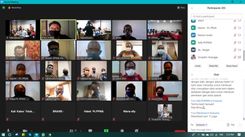
In the Indigenous Peoples Bill Talkshow organized by the Partnership and the Coalition to Monitor the Indigenous Peoples Bill, at least we can find out the attitudes of several ministries regarding the Indigenous Peoples Bill. Representatives from various ministries were present to provide responses to the Indigenous Peoples Bill, including the Ministry of Home Affairs, the Ministry of ATR/BPN, the Coordinating Ministry for Human Empowerment and Culture (PMK), the Ministry of Maritime Affairs and Fisheries, the Ministry of Education and Culture, and the Ministry of Social Affairs. Meanwhile, the Ministry of Environment and Forestry (KLHK) did not attend the invitation.
From the presentations of the administrative officials representing the ministries, it can be concluded that in general the relevant ministries provide support for the Indigenous Peoples Bill, and sectoralism is also felt by officials in the ministries in carrying out public services for indigenous peoples. So that sectoralism needs to be overcome by the Indigenous Peoples Bill.
The support of the DPR (with 8 factions agreeing to the bill to be brought to the plenary session) and the expression of support from ministry officials is indeed a breath of fresh air after the long struggle of the community, especially AMAN, which has been pushing for the ratification of the bill for years. After this, we must all ensure that the support of legislative and executive officials is not merely performative. In substance, it must be ensured whether the spirit of respect, protection, and fulfillment of the rights of indigenous peoples is reflected in the draft bill that will be discussed together by the DPR and the government.
From the draft so far, for example, there are several regulations that are not in accordance with the aspirations of civil society, for example in the working committee report, one of which is regulated regarding evaluation every 5 years. It is also necessary to see the views of the DPR and the government regarding key concepts related to indigenous peoples. For example, how are the regulations regarding the position of indigenous peoples as legal subjects? How are the regulations regarding the position of indigenous territories? Are they in line with the wishes of indigenous peoples? Are they in accordance with the Constitutional Court Decision 35/2012 and the MPR Decree IX/2001? In fact, one of the administrative officials still understands the right to indigenous territories as a private right only.
Sectoralism will also not be resolved if officials in the ministry still want the Indigenous Peoples Bill to follow the normative framework of sectoral laws and their implementing regulations. This is illustrated, for example, from the presentation of several speakers who asked for the Indigenous Peoples Bill to be adjusted to previously existing regulations, for example regulations in the marine and fisheries sector.
There are many substances in the Indigenous Peoples Bill that we need to monitor together. It is necessary to ensure that support from legislative and executive officials is also accompanied by adequate understanding and the same as the interests of indigenous peoples, so that the bill that has been expected to be enacted for years can resolve the violations of indigenous peoples' rights that occur in the field. The Indigenous Peoples Bill is indeed urgent, but more importantly, the discussion must be carried out carefully so that the interests of indigenous peoples are accommodated. The rights of indigenous peoples to FPIC are also important to consider. This means that in the discussion of the Indigenous Peoples Bill, indigenous peoples have the right to be involved and asked for their approval regarding the articles in the bill before it is passed. Not only involving traditional leaders, all representatives of indigenous peoples should also be involved and asked for their approval. For example, indigenous women, the suffering, interests, and aspirations of indigenous women will certainly only be represented when indigenous women are given space to voice their own experiences and thoughts.
Don't let the fate of the Indigenous Peoples Bill be like the 2013 Farmer Protection and Empowerment Law. The initial spirit of the law to protect farmers is at odds with the substance of the articles that were finally passed. The substance that was finally passed into law was also different from the draft proposed by civil society. This is because in discussing the bill, the DPR and the government should not be happy with themselves. There are many parties that can be involved in discussing the Indigenous Peoples Bill later, especially indigenous peoples themselves.